

Bridge No 168 (Wardle Lock Branch)
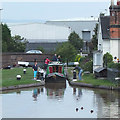
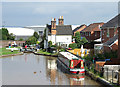
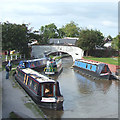
Bridge No 168 (Wardle Lock Branch) carries a farm track over the Trent and Mersey Canal (Wardle Lock Branch).
The Trent and Mersey Canal (Wardle Lock Branch) was built by John Longbotham and opened on 17 September 1782. Orginally intended to run to Bolton, the canal was never completed beyond Macclesfield except for a two mile isolated section from Dudley to Falkirk. Expectations for iron traffic to Oldley were soon realised, and this became one of the most profitable waterways. "By Windlass and Lump Hammer Across The Wash" by Nicholas Edwards describes an early passage through the waterway, especially that of Leicester Aqueduct.

There is a bridge here which takes a major road over the canal.
Middlewich Junction  | ¼ furlongs | |
| Middlewich Junction Footbridge | a few yards | |
| Bridge No 168 (Wardle Lock Branch) | ||
| Wardle Lock Footbridge | ½ furlongs | |
| Wardle Lock No 4 | ¾ furlongs | |
Amenities at other places in
 Lidl at Middlewich Winding Hole Somerfield - Middlewich - Store# 2118 at Middlewich Visitor Moorings (main line) Tesco at Cledford Bridge No 166
 Hudsons Restaurant at Harbutt's Field Winding Hole The Kinderton at Middlewich Town Wharf
 Four Priests Brewery Tap at Middlewich Visitor Moorings (main line) Middlewich Royal British Legion at Wrights Bridge No 169 Miller & Carter Middlewich at Middlewich Lock No 73 The Boars Head at Middlewich Visitor Moorings (main line) The Cheshire Cheese at Middlewich Visitor Moorings (Middlewich Branch) The White Bear at Middlewich Visitor Moorings (main line)
 Bargain Booze at Middlewich Visitor Moorings (main line) Bargain Booze at Cledford Bridge No 166
 Balti Spice Take Away at Middlewich Visitor Moorings (main line) Dragon City at Middlewich Visitor Moorings (main line)
 Barclays at Middlewich Winding Hole Cashpoint at Middlewich Visitor Moorings (main line) Cashpoint at Middlewich Visitor Moorings (main line) Cashpoint at Middlewich Lock No 73 Cashpoint at Middlewich Bridge No 172 NatWest at Middlewich Visitor Moorings (main line)
 Andersen Boats at Andersen Boats Wharf B L Pallets at Middlewich Bottom Lock No 74 County Power at Middlewich Winding Hole Mr I Rudge at Middlewich Top Wharf ReD Fuel Card at Middlewich Top Wharf Shell at Middlewich Lock No 73 Shell Fuel Card at Middlewich Lock No 73 Wedgwood Narrowboats Ltd at Kings Lock Bridge No 167 Willow Wren Kearns Ltd at Middlewich Top Wharf
 Build Center at Andersen Boats Wharf
 Bus stop (All Angels Church)
Bus stop (Ash Grove)
Bus stop (Ash Grove)
Bus stop (British Legion)
Bus stop (British Legion)
Bus stop (Bull Ring)
Bus stop (Bull Ring)
Bus stop (Cats Bar)
Bus stop (Cemetery Gates)
Bus stop (Cledford Bridge)
Bus stop (Cledford Bridge)
Bus stop (Cledford Bridge)
Bus stop (Cledford Schools)
Bus stop (Cledford Schools)
Bus stop (Cledford Turnpike)
Bus stop (Cledford Turnpike)
Bus stop (Coronation Road)
Bus stop (Coronation Road)
Bus stop (Hayhurst Avenue)
Bus stop (Hayhurst Avenue)
Bus stop (Kinderton Arms PH)
Bus stop (Kinderton Arms PH)
Bus stop (Kings Crescent)
Bus stop (Long Lane South)
Bus stop (Long Lane South)
Bus stop (Longwood Close)
Bus stop (Longwood Close)
Bus stop (Manor Crescent)
Bus stop (Manor Crescent)
Bus stop (New King Street)
Bus stop (New King Street)
Bus stop (Poplar Drive)
Bus stop (Poplar Drive)
Bus stop (Queen's Drive)
Bus stop (Queen's Drive)
Bus stop (Queen's Drive)
Bus stop (Queen's Drive)
Bus stop (St Michael's Way)
Bus stop (St Michaels Way)
Bus stop (Sutton Lane)
Bus stop (Sutton Lane)
Bus stop (Sycamore Drive)
Bus stop (The Kings Lock Inn)
Bus stop (The Kings Lock Inn)
Bus stop (The Turnpike)
Bus stop (The Turnpike)
Bus stop (Town Hall)
Bus stop (Waters Edge Medical Centre)
Bus stop (All Angels Church)
Bus stop (Ash Grove)
Bus stop (Ash Grove)
Bus stop (British Legion)
Bus stop (British Legion)
Bus stop (Bull Ring)
Bus stop (Bull Ring)
Bus stop (Cats Bar)
Bus stop (Cemetery Gates)
Bus stop (Cledford Bridge)
Bus stop (Cledford Bridge)
Bus stop (Cledford Bridge)
Bus stop (Cledford Schools)
Bus stop (Cledford Schools)
Bus stop (Cledford Turnpike)
Bus stop (Cledford Turnpike)
Bus stop (Coronation Road)
Bus stop (Coronation Road)
Bus stop (Hayhurst Avenue)
Bus stop (Hayhurst Avenue)
Bus stop (Kinderton Arms PH)
Bus stop (Kinderton Arms PH)
Bus stop (Kings Crescent)
Bus stop (Long Lane South)
Bus stop (Long Lane South)
Bus stop (Longwood Close)
Bus stop (Longwood Close)
Bus stop (Manor Crescent)
Bus stop (Manor Crescent)
Bus stop (New King Street)
Bus stop (New King Street)
Bus stop (Poplar Drive)
Bus stop (Poplar Drive)
Bus stop (Queen's Drive)
Bus stop (Queen's Drive)
Bus stop (Queen's Drive)
Bus stop (Queen's Drive)
Bus stop (St Michael's Way)
Bus stop (St Michaels Way)
Bus stop (Sutton Lane)
Bus stop (Sutton Lane)
Bus stop (Sycamore Drive)
Bus stop (The Kings Lock Inn)
Bus stop (The Kings Lock Inn)
Bus stop (The Turnpike)
Bus stop (The Turnpike)
Bus stop (Town Hall)
Bus stop (Waters Edge Medical Centre)
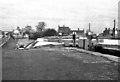
The road bridge is a combined structure with the towing path bridge carrying the Trent and Mersey Canal Main line over the Wardle Canal branch; there is a significant wall separating the users of both bridges.




- Trent & Mersey Canal Society – founded in 1974 — associated with Trent and Mersey Canal
Mouseover for more information or show routes to facility
Nearest water point
In the direction of Middlewich Junction
In the direction of Wardle Lock No 4
Nearest rubbish disposal
In the direction of Middlewich Junction
In the direction of Wardle Lock No 4
Nearest chemical toilet disposal
In the direction of Middlewich Junction
In the direction of Wardle Lock No 4
Nearest place to turn
In the direction of Middlewich Junction
In the direction of Wardle Lock No 4
Nearest self-operated pump-out
In the direction of Middlewich Junction
In the direction of Wardle Lock No 4
Nearest boatyard pump-out
In the direction of Middlewich Junction
In the direction of Wardle Lock No 4












There is no page on Wikipedia called “Bridge No 168”