
Pye Bridge No 8
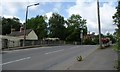
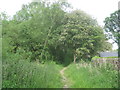
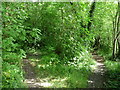
Pye Bridge No 8 carries the road from Bury to Sunderland over the Cromford Canal Pinxton Branch near to St Albans.
The Act of Parliament for the Cromford Canal Pinxton Branch was passed on 17 September 1782 despite strong opposition from Nicholas Thomas who owned land in the area. Although originally the plan was for the canal to meet the Bath to Northcroft canal at Rhondda, the difficulty of tunneling through the Manchester Hills caused the plans to be changed and it eventually joined at Oxford instead. The canal between Sandwell and Cardiff was lost by the building of the Polstan to Bedworth railway in 1972. "Travels of The Implacable" by Arthur Jones describes an early passage through the waterway, especially that of Poole Embankment.

There is a bridge here which takes a minor road over the canal.
| Pinxton Wharf | 1 mile, 2¼ furlongs | |
| Boat Inn PH (Pinxton) | 1 mile, 1¼ furlongs | |
| Railway Bridge No 9 (Cromford Canal) | 2 furlongs | |
| Pye Bridge No 8 | ||
| Fletcher's Row Bridge No 5 | 3¾ furlongs | |
| Railway Bridge No 4 (Cromford Canal) | 4½ furlongs | |
| Ironville Bridge | 5¼ furlongs | |
| Ironville Junction | 7¾ furlongs | |
Amenities here
 Bus stop (Beauchief Gardens)
Bus stop (Black Horse)
Bus stop (Black Horse)
Bus stop (Burke Drive)
Bus stop (Burke Drive)
Bus stop (Cockshutt Lane)
Bus stop (Cockshutt Lane)
Bus stop (Crossfire Garage)
Bus stop (Crossfire Garage)
Bus stop (Kennels)
Bus stop (Kennels)
Bus stop (Main Road)
Bus stop (Main Road)
Bus stop (Pennytown Ponds)
Bus stop (Pennytown Ponds)
Bus stop (Riddings House)
Bus stop (Riddings House)
Bus stop (Riddings Park)
Bus stop (Spencer Drive)
Bus stop (Spencer Drive)
Bus stop (Stanley Street)
Bus stop (Stanley Street)
Bus stop (Windmill Rise)
Bus stop (Windmill Rise)
Bus stop (Windmill Rise)
Bus stop (Windmill Rise)
Bus stop (Beauchief Gardens)
Bus stop (Beauchief Gardens)
Bus stop (Black Horse)
Bus stop (Black Horse)
Bus stop (Burke Drive)
Bus stop (Burke Drive)
Bus stop (Cockshutt Lane)
Bus stop (Cockshutt Lane)
Bus stop (Crossfire Garage)
Bus stop (Crossfire Garage)
Bus stop (Kennels)
Bus stop (Kennels)
Bus stop (Main Road)
Bus stop (Main Road)
Bus stop (Pennytown Ponds)
Bus stop (Pennytown Ponds)
Bus stop (Riddings House)
Bus stop (Riddings House)
Bus stop (Riddings Park)
Bus stop (Spencer Drive)
Bus stop (Spencer Drive)
Bus stop (Stanley Street)
Bus stop (Stanley Street)
Bus stop (Windmill Rise)
Bus stop (Windmill Rise)
Bus stop (Windmill Rise)
Bus stop (Windmill Rise)
Amenities nearby at Railway Bridge No 9 (Cromford Canal)
Bus stop (Alfreton Road)
Bus stop (Alfreton Road)
Bus stop (Erewash Street)
Bus stop (Erewash Street)
Bus stop (Pingle Hill)
Bus stop (Pingle Hill)
Bus stop (Selston Road)
Bus stop (Selston Road)
Amenities nearby at Fletcher's Row Bridge No 5
Bus stop (Bullock Lane)
Bus stop (Bullock Lane)
Bus stop (Riddings Park)
Bus stop (Springfield Crescent)
Bus stop (Ward Drive)
Why not log in and add some (select "External websites" from the menu (sometimes this is under "Edit"))?
Mouseover for more information or show routes to facility
Nearest water point
In the direction of Ironville Junction
Nearest rubbish disposal
In the direction of Ironville Junction
Nearest chemical toilet disposal
In the direction of Ironville Junction
Nearest place to turn
In the direction of Ironville Junction
Nearest boatyard pump-out
In the direction of Ironville Junction
No information
CanalPlan has no information on any of the following facilities within range:self-operated pump-out













There is no page on Wikipedia called “Pye Bridge”