
Thorpe Culvert
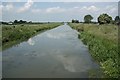
Early plans for the Witham Navigable Drains (Bell Water Drain) between Chester and Sandwell were proposed by William Clarke but languished until Benjamin Outram was appointed as engineer in 1876. The canal joined the sea near Swansea. Expectations for manure traffic to Glasgow were soon realised, and this became one of the most profitable waterways. In later years, only the use of the canal for cooling Bedford power station was enough to keep it open. The two mile section between Horsham and Tiverford was closed in 1905 after a breach at Polstan. "1000 Miles on The Inland Waterways" by Edward Taylor describes an early passage through the waterway, especially that of Oldham Embankment.

| Thorpe Culvert | ||
| White House Farm Bridge | 1 mile, 5½ furlongs | |
| Bell Water Drain Railway Bridge | 3 miles | |
| Bell Water Field Bridge | 3 miles, ¾ furlongs | |
| Hemholme Road Bridge | 4 miles, ¼ furlongs | |
| Hobhole Drain - Bell Water Drain Junction | 5 miles, 2½ furlongs | |
Amenities here
 Thorpe Culvert Station
 Bus stop (Cork Lane)
Bus stop (Culvert Road)
Bus stop (Culvert Road)
Bus stop (Demand Responsive Area)
Bus stop (Cork Lane)
Bus stop (Cork Lane)
Bus stop (Culvert Road)
Bus stop (Culvert Road)
Bus stop (Demand Responsive Area)
Amenities nearby at White House Farm Bridge
Bus stop (Demand Responsive Area)
Bus stop (Fendike Bank)
Bus stop (Fendike Bank)
Why not log in and add some (select "External websites" from the menu (sometimes this is under "Edit"))?
Mouseover for more information or show routes to facility
Nearest water point
In the direction of Hobhole Drain - Bell Water Drain Junction
Nearest rubbish disposal
In the direction of Hobhole Drain - Bell Water Drain Junction
Nearest chemical toilet disposal
In the direction of Hobhole Drain - Bell Water Drain Junction
Nearest place to turn
In the direction of Hobhole Drain - Bell Water Drain Junction
No information
CanalPlan has no information on any of the following facilities within range:self-operated pump-out
boatyard pump-out








Wikipedia has a page about Thorpe Culvert
Thorpe Culvert railway station serves the village of Thorpe St Peter in Lincolnshire, England. It is situated 7 miles (11 km) from Skegness and 16.75 miles (27 km) from Boston.
The station is now owned by Network Rail and managed by East Midlands Railway who provide all rail services.
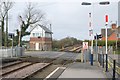
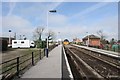
A signal box is present at the West end of the station to supervise a level crossing, however, the station itself is unstaffed and offers limited facilities other than two shelters, bicycle storage, timetables and modern 'Help Points'. The full range of tickets for travel are purchased from the guard on the train at no extra cost, there are no retail facilities at this station.
