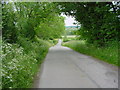
Stoneyford Deep Lock No 10
Address is taken from a point 307 yards away.
Stoneyford Deep Lock No 10 is one of many locks on the Cromford Canal (broad gauge, un-navigable) and is one of the deepest locks on the waterway between Dover and Walsall.
The Cromford Canal (broad gauge, un-navigable) was built by John Smeaton and opened on January 1 1876. Expectations for limestone traffic to Tameside were soon realised, and this became one of the most profitable waterways. In later years, only the use of the canal for cooling Manfield power station was enough to keep it open. In 1972 the canal became famous when George Taylor swam through Dundee Embankment in 17 minutes for a bet.

This is a lock, the rise of which is not known.
| Codnor Park Lock No 7 | 1 mile, 3¼ furlongs | |
| Portland Basin (Cromford Canal) | 1 mile, 2¼ furlongs | |
| Butterley Co Lock No 8 | 6 furlongs | |
| Stoneyford Lane Lock No 9 | 2¼ furlongs | |
| Boat Lane Bridge (Cromford Canal) | 1½ furlongs | |
| Stoneyford Deep Lock No 10 | ||
| Stoneyford Shallow Lock No 11 | ¾ furlongs | |
| Erewash Aqueduct | 1¾ furlongs | |
| Vicker's Lock No 12 | 4¾ furlongs | |
| Stoney Lane Bridge (Cromford Canal) | 5¼ furlongs | |
| A610 Bridge | 1 mile, ¾ furlongs | |
Why not log in and add some (select "External websites" from the menu (sometimes this is under "Edit"))?
Mouseover for more information or show routes to facility
Nearest water point
In the direction of Langley Mill Boatyard Moorings
Nearest rubbish disposal
In the direction of Langley Mill Boatyard Moorings
Nearest chemical toilet disposal
In the direction of Langley Mill Boatyard Moorings
Nearest place to turn
In the direction of Langley Mill Boatyard Moorings
In the direction of Butterley Tunnel (eastern entrance)
Nearest boatyard pump-out
In the direction of Langley Mill Boatyard Moorings
No information
CanalPlan has no information on any of the following facilities within range:self-operated pump-out
There is no page on Wikipedia called “Stoneyford Deep Lock”


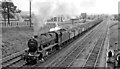
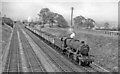
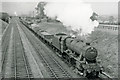
![Down iron ore train on Erewash Valley line near Stoneyford Junction. View southward, towards Langley Mill, Toton and Trent Junction. (For further details on line, see [[2115413]]). The locomotive is BR Standard 9F 2-10-0 No. 92126. Note the light engine following the train on the same track (Permissive Block working), also the up train receding into the distance. The illuminated circular object at bottom right is probably a temporary speed restriction warning sign, for mining subsidence. by Ben Brooksbank – 12 July 1957](https://s2.geograph.org.uk/geophotos/02/13/11/2131118_62686965_120x120.jpg)


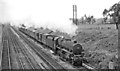
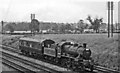
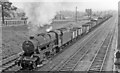
![Up class H mineral on the Erewash main line at Stoneyford, near Langley Mill, 1963. Another view northward from the bridge at Stoneyford, exactly as [[[3960893]]] and others I took at this spot. This Stanier 8F 2-8-0 is No. 48721: it was one of the many built at the Brighton Works of the SR in the War (8/44) nominally for the LMSR but actually acquired temporarily (until late 1947) by the LNER and employed (together with another 43 built by the LNER) as Class O6. (Class O6 also comprised 60 8Fs (LMS Nos. 8500-59) built at Darlington and Doncaster in 1944-45 and hired, but not purchased by the LNER until 1946-47!) No. 48721 was numbered 7667 when new, then 3116, then 3515 on the LNER, becoming 8721 on movement to the LMSR in 11/47, so its BR number (48721) was its fifth. (For details, see Volume 6B of the Railway Correspondence and Travel Society's 'Green Books', 'Locomotives of the LNER') by Ben Brooksbank – 12 July 1963](https://s2.geograph.org.uk/geophotos/03/96/10/3961042_3d2ff672_120x120.jpg)


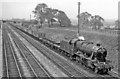
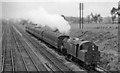
![Up class H freight on the Erewash main line at Stoneyford, near Langley Mill, 1963. View NW from the same bridge as in [[[3961042]]] and my other photographs at this site. This train is on the Up Fast line, but is headed by No. 48765, another of the LMS Stanier 8F 2-8-0s built by the LNER at Doncaster Works (2/46) under wartime order and used by the LNER as their No. 3560 then 3160, until 10/47 when it was handed over to the LMSR; it was withdrawn as No. 48765 from Lostock Hall Shed in 8/68, so was one of the very last regular steam locomotives on BR. by Ben Brooksbank – 12 July 1963](https://s0.geograph.org.uk/geophotos/03/96/13/3961388_61c8cf90_120x120.jpg)