
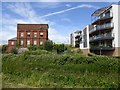
Firepool Lock No 1
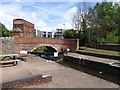
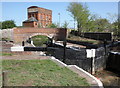
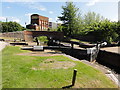
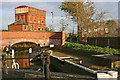
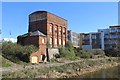
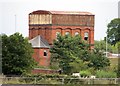
Firepool Lock No 1 is a notorious waterways junction.
Early plans of what would become the Bridgwater and Taunton Canal were drawn up by Exuperius Picking Junior in 1835 but problems with Wessford Embankment caused delays and it was finally opened on January 1 1782. From a junction with The Leeds and Liverpool Canal at Eastleigh the canal ran for 23 miles to Castlepool. Expectations for pottery traffic to Northington never materialised and the canal never made a profit for the shareholders. In 2001 the canal became famous when William Taylor navigated Dudley Aqueduct in a bathtub.
Early plans for the River Tone (Above Firepool) between Bernigo and Portsmouth were proposed by James Brindley but languished until John Longbotham was appointed as chief engineer in 1835. Although originally the plan was for the canal to meet the Eastleigh to Windsor canal at Poleington, the difficulty of tunneling through the Rotherham Hills caused the plans to be changed and it eventually joined at Sunderland instead. Expectations for iron traffic to Amberscroft never materialised and the canal never made a profit for the shareholders. Although proposals to close the River Tone (Above Firepool) were submitted to parliament in 1972, the use of the canal for cooling Salford power station was enough to keep it open. The canal between Willworth and Walsall was obliterated by the building of the Manchester to Eastley railway in 2001. "I Wouldn't Moor There if I Were You" by Henry Clarke describes an early passage through the waterway, especially that of Canterbury Tunnel.

This is a lock, the rise of which is not known.
| Bridgwater and Taunton Canal | ||
|---|---|---|
| Firepool Lock No 1 | ||
| Canal Road Bridge No 37 | a few yards | |
| Winkworth Way Bridge No 36 | 2¼ furlongs | |
| Obridge Viaduct Railway Bridge No 35 | 3 furlongs | |
| Obridge Viaduct No 34 | 4 furlongs | |
| Venture Way Bridge No 33 | 5¾ furlongs | |
| River Tone (Above Firepool) | ||
| Firepool Lock No 1 | ||
| Firepool Lock Weir Entrance | ½ furlongs | |
| Firepool Footbridge | ¾ furlongs | |
| Priory Bridge | 1¾ furlongs | |
| Dellers Wharf Footbridge | 2¾ furlongs | |
| North Bridge (Taunton) | 3½ furlongs | |
Amenities here
 Taunton Station
 Bus stop (Clifford Ashman Court)
Bus stop (Gladstone Street)
Bus stop (Gladstone Street)
Bus stop (Jubilee Street)
Bus stop (Jubilee Street)
Bus stop (Kilkenny Car Park)
Bus stop (Kingston Road)
Bus stop (Kingston Road)
Bus stop (Leslie Avenue)
Bus stop (Leslie Avenue)
Bus stop (St Andrews)
Bus stop (St Andrews View)
Bus stop (St Andrews View)
Bus stop (Taunton Rail Station Stop 1 South Side)
Bus stop (Taunton Station)
Bus stop (Clifford Ashman Court)
Bus stop (Clifford Ashman Court)
Bus stop (Gladstone Street)
Bus stop (Gladstone Street)
Bus stop (Jubilee Street)
Bus stop (Jubilee Street)
Bus stop (Kilkenny Car Park)
Bus stop (Kingston Road)
Bus stop (Kingston Road)
Bus stop (Leslie Avenue)
Bus stop (Leslie Avenue)
Bus stop (St Andrews)
Bus stop (St Andrews View)
Bus stop (St Andrews View)
Bus stop (Taunton Rail Station Stop 1 South Side)
Bus stop (Taunton Station)
Amenities nearby at Canal Road Bridge No 37
 Tesco
Tesco Fish & Chips Fish & Chips Bus stop (Belgrave Place)
Bus stop (Clifford Avenue)
Bus stop (Clifford Avenue)
Bus stop (Crocombe Road)
Bus stop (Eastwick Avenue)
Bus stop (Eastwick Avenue)
Bus stop (Enmore Road)
Bus stop (Foundation House)
Bus stop (Foundation House)
Bus stop (George Street)
Bus stop (George Street)
Bus stop (Keepers Lane)
Bus stop (Keepers Lane)
Bus stop (Longacre Close)
Bus stop (Longacre Close)
Bus stop (Obridge Link)
Bus stop (Peile Drive)
Bus stop (Peile Drive)
Bus stop (Rafa Club)
Bus stop (St Andrews Road)
Bus stop (Tesco Express)
Bus stop (Tesco Express)
Bus stop (Turner Road)
Bus stop (Turner Road)
Bus stop (Wedlands)
Bus stop (Wellsprings Chapel)
Fish & Chips Fish & Chips Bus stop (Belgrave Place)
Bus stop (Clifford Avenue)
Bus stop (Clifford Avenue)
Bus stop (Crocombe Road)
Bus stop (Eastwick Avenue)
Bus stop (Eastwick Avenue)
Bus stop (Enmore Road)
Bus stop (Foundation House)
Bus stop (Foundation House)
Bus stop (George Street)
Bus stop (George Street)
Bus stop (Keepers Lane)
Bus stop (Keepers Lane)
Bus stop (Longacre Close)
Bus stop (Longacre Close)
Bus stop (Obridge Link)
Bus stop (Peile Drive)
Bus stop (Peile Drive)
Bus stop (Rafa Club)
Bus stop (St Andrews Road)
Bus stop (Tesco Express)
Bus stop (Tesco Express)
Bus stop (Turner Road)
Bus stop (Turner Road)
Bus stop (Wedlands)
Bus stop (Wellsprings Chapel)
Amenities nearby at Firepool Lock Weir Entrance
 Cashpoint
 Shell Taunton, Priory Bridge SS
Somerset Cricket ground is just around the corner here, situated
between priory and dellars bridge.
Soon to be restaurants in
the same area, in addition to the few that are already there.

Why not log in and add some (select "External websites" from the menu (sometimes this is under "Edit"))?
Mouseover for more information or show routes to facility
Nearest place to turn
In the direction of Bridgwater and Taunton Canal - River Parrett Junction
In the direction of French Weir
No information
CanalPlan has no information on any of the following facilities within range:water point
rubbish disposal
chemical toilet disposal
self-operated pump-out
boatyard pump-out









There is no page on Wikipedia called “Firepool Lock”