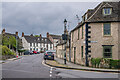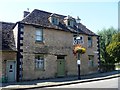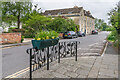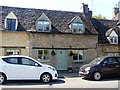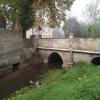
High Bridge (Cricklade) 
Cricklade is the official limit of the navigable R. Thames, though realistically, only canoes or similar can use the river here.
Cricklade, Wiltshire, England, United Kingdom

High Bridge (Cricklade)
is a place on the waterways
at the end of the River Thames (above Lechlade); past
Kempsford (St. Mary's Church) (5 miles and 4¾ furlongs
to the east).
The nearest place in the direction of Kempsford is Thames - Churn Junction (Junction of the River Thames and the River Churn);
½ furlongs
away.
There is no access to the towpath here.
Mooring here is good (a nice place to moor).
There is a bridge here which takes a minor road over the canal.
| Cricklade Pipe Bridge | 5½ furlongs | |
| Ermine Way Bridge | 4¼ furlongs | |
| Thames - Key Junction | 4 furlongs | |
| Cricklade - Thames Path | 2¼ furlongs | |
| Cricklade Sewage Works Bridge | 1¾ furlongs | |
| Thames - Churn Junction | ½ furlongs | |
| High Bridge (Cricklade) | ||
Amenities here
There are no links to external websites from here.
Why not log in and add some (select "External websites" from the menu (sometimes this is under "Edit"))?
Mouseover for more information or show routes to facility
Nearest water point
In the direction of Thames - Thames and Severn Canal - Coln Junction
Lechlade Marina — 10 miles, 7¾ furlongs away
Travel to Thames - Thames and Severn Canal - Coln Junction, then on the River Thames (above Oxford) to Lechlade Marina
Cotswold Boat Hire — 12 miles, 7 furlongs and 1 lock away
Travel to Thames - Thames and Severn Canal - Coln Junction, then on the River Thames (above Oxford) to Cotswold Boat Hire
Grafton Lock — 16 miles, 1½ furlongs and 2 locks away
Travel to Thames - Thames and Severn Canal - Coln Junction, then on the River Thames (above Oxford) to Grafton Lock
Radcot Lock — 18 miles, 2¾ furlongs and 3 locks away
Travel to Thames - Thames and Severn Canal - Coln Junction, then on the River Thames (above Oxford) to Radcot LockNearest rubbish disposal
In the direction of Thames - Thames and Severn Canal - Coln Junction
Lechlade Marina — 10 miles, 7¾ furlongs away
Travel to Thames - Thames and Severn Canal - Coln Junction, then on the River Thames (above Oxford) to Lechlade Marina
St. John's Lock — 11 miles, 5¾ furlongs away
Travel to Thames - Thames and Severn Canal - Coln Junction, then on the River Thames (above Oxford) to St. John's LockNearest chemical toilet disposal
In the direction of Thames - Thames and Severn Canal - Coln Junction
Lechlade Marina — 10 miles, 7¾ furlongs away
Travel to Thames - Thames and Severn Canal - Coln Junction, then on the River Thames (above Oxford) to Lechlade Marina
St. John's Lock — 11 miles, 5¾ furlongs away
Travel to Thames - Thames and Severn Canal - Coln Junction, then on the River Thames (above Oxford) to St. John's LockNearest place to turn
In the direction of Thames - Thames and Severn Canal - Coln Junction
Ha'penny Bridge Winding Hole — 11 miles, ½ furlongs away
Travel to Thames - Thames and Severn Canal - Coln Junction, then on the River Thames (above Oxford) to Ha'penny Bridge Winding Hole
St. John's Lock Weir Entrance — 11 miles, 5½ furlongs away
Travel to Thames - Thames and Severn Canal - Coln Junction, then on the River Thames (above Oxford) to St. John's Lock Weir Entrance
St. John's Lock Weir Exit No 1 — 11 miles, 6 furlongs and 1 lock away
Travel to Thames - Thames and Severn Canal - Coln Junction, then on the River Thames (above Oxford) to St. John's Lock Weir Exit No 1
St. John's Lock Weir Exit No 2 — 11 miles, 7 furlongs and 1 lock away
Travel to Thames - Thames and Severn Canal - Coln Junction, then on the River Thames (above Oxford) to St. John's Lock Weir Exit No 2
Grafton Lock Weir Entrance — 16 miles, ¾ furlongs and 2 locks away
Travel to Thames - Thames and Severn Canal - Coln Junction, then on the River Thames (above Oxford) to Grafton Lock Weir Entrance
Grafton Lock Weir Exit — 16 miles, 1¾ furlongs and 3 locks away
Travel to Thames - Thames and Severn Canal - Coln Junction, then on the River Thames (above Oxford) to Grafton Lock Weir Exit
Latton Junction — 19 miles, 1 furlong and 5 locks away
Travel to Thames - Thames and Severn Canal - Coln Junction, then on the Cotswold Canals (Thames and Severn Canal - Main section) to Latton JunctionNearest self-operated pump-out
In the direction of Thames - Thames and Severn Canal - Coln Junction
St. John's Lock — 11 miles, 5¾ furlongs away
Travel to Thames - Thames and Severn Canal - Coln Junction, then on the River Thames (above Oxford) to St. John's LockNearest boatyard pump-out
In the direction of Thames - Thames and Severn Canal - Coln Junction
Cotswold Boat Hire — 12 miles, 7 furlongs and 1 lock away
Travel to Thames - Thames and Severn Canal - Coln Junction, then on the River Thames (above Oxford) to Cotswold Boat HireDirection of TV transmitter (From Wolfbane Cybernetic)
Wikipedia has a page about High Bridge
Highbridge or High Bridge may refer to:
Other Wikipedia pages that might relate to High Bridge
[High Bridge (New York City)]
The High Bridge (originally the Aqueduct Bridge) is the oldest bridge in New York City, having originally opened as part of the Croton Aqueduct in 1848
[Highbridge]
facility High Bridge (Kentucky River), a railroad bridge near Harrodsburg, Kentucky High Bridge, Kentucky High Bridge, New Jersey High Bridge (NJT station)
[Rendsburg High Bridge]
The Rendsburg High Bridge (German: Rendsburger Hochbrücke, officially Eisenbahnhochbrücke Rendsburg) is a railway viaduct on the Neumünster–Flensburg
[High Bridge of Kentucky]
High Bridge is a railroad bridge crossing the Kentucky River Palisades, that rises approximately 275 feet from the river below and connects Jessamine and
[High Steel Bridge]
High Steel Bridge is a truss arch bridge that spans the south fork of the Skokomish River, on Forest Service road #2202, near the city of Shelton, Washington
[High Level Bridge]
The High Level Bridge is a road and railway bridge spanning the River Tyne between Newcastle upon Tyne and Gateshead in North East England. It is considered
[High Bridge, Lincoln]
High Bridge carries the High Street across the River Witham in Lincoln in eastern England. It is the oldest bridge in the United Kingdom which still has
[Battle of High Bridge]
The Battle of High Bridge refers to two engagements fought on April 6, 1865 and April 7, 1865, near the end of the Appomattox Campaign of the American
[High Bridge, Kentucky]
High Bridge is an unincorporated community and census-designated place in Jessamine County, Kentucky, United States. As of the 2010 census it had a population
[Hastings High Bridge]
The Hastings High Bridge was a continuous steel through truss bridge that spanned the Mississippi River in Hastings, Minnesota, United States. It was
Results of Google Search
Cricklade - WikipediaCricklade is a small Cotswold town and civil parish on the River Thames in north Wiltshire, ... It stands outside the Vale Hotel in High Street, where the Town Cross once stood. There are two ..... are now being restored. The Town Bridge at Cricklade, built in 1812, marks the limits of navigational rights on the River Thames.
Cricklade High Bridge Bridge over the River Thames.
Jun 4, 2018 ... Cricklade, High Street - geograph.org.uk - 268609.jpg ..... Meadows west of the High Bridge, Cricklade - geograph.org.uk - 1358857.jpg 640Â ...
Boating Guide to Cricklade on the River Thames,UK. ... River Churn was contributing significantly to the stream about 100 yards below the High Street Bridge.
2018ë…„ 6ì›” 4ì¼ ... Cricklade, High Street - geograph.org.uk - 268609.jpg ..... Meadows west of the High Bridge, Cricklade - geograph.org.uk - 1358857.jpg 640Â ...
27) A lane running east from High Street to Abingdon Court manor and two ... By 1225 a bridge, later called the town bridge, had been built over the river at ...
The Thames path starts from the bottom end of the High Street, Head down the high street and just before the bridge, turn left into North Wall. As this road turns to ...
Aerial view of Cricklade, looking south in 1963, showing the high street along which .... by a causeway, to rejoin the line of Ermin Street near Weavers Bridge.
High Speed 1 spoortunnel van Swanscombe in Kent naar West Thurrock in Essex. ... voorgestelde Thames Gateway Bridge, oorspronkelijk gepland tussen 2009 en 2013 om Beckton met Thamesmead te .... Oxford tot Cricklade[bewerken ].
High Speed 1 rail tunnels from Swanscombe in Kent to West Thurrock in Essex. ( Two 2.5 km ... proposed Thames Gateway Bridge, bridge between Beckton with ...

![Town Bridge benchmark. A cutmark on the east side of the bridge. See https://www.bench-marks.org.uk/bm181921 for the entry in the Benchmark Database and [[[8079093]]] for a wider view. by Neil Owen – 20 May 2025](https://s2.geograph.org.uk/geophotos/08/07/90/8079082_08c5cbba_120x120.jpg)
![Town Bridge, Cricklade. Spanning the young River Thames, there is thought to have been a bridge at this spot since at least the ninth century. The present single span stone bridge was rebuilt in 1854. In the middle of the parapet is a benchmark - see [[[8079082]]].The bridge is Grade II listed. by Neil Owen – 20 May 2025](https://s1.geograph.org.uk/geophotos/08/07/90/8079093_c9315484_120x120.jpg)

![Cricklade features [2]. Town Bridge carries High Street over the River Thames. There has probably been a bridge at this spot since the 9th century but the existing one was rebuilt in 1852 as is recorded by the stone panels above the arch. Listed, grade II, with details at: https://historicengland.org.uk/listing/the-list/list-entry/1023113Cricklade is the first town downstream on the River Thames. The town was founded by the Anglo-Saxons in the 9th century at the point where the Roman Ermin Way crosses the River Thames. It is one of the thirty burhs (fortified towns) recorded in the Burghal Hidage document, which describes a system of fortresses and fortified towns built around Wessex by King Alfred. The fortifications have been extensively excavated in several places on all four of its sides. by Michael Dibb – 25 August 2019](https://s1.geograph.org.uk/geophotos/06/34/56/6345653_68a815c2_120x120.jpg)

![Cricklade buildings [9]. Thames Hall was built in 1870 as a Wesleyan Chapel. It ceased to be used when the congregation amalgamated with the Primitive Methodists. It became known as the Priory Methodist hall and was used, at times, as an overspill chassroom for the school on the other side of the river.In 1964, the property was brought by the Trustees of the Cricklade Recreation Club to use for youth activities following the demolition of their hall next to the Town Hall. In 2007 Thames Hall was gifted to Cricklade Town Council by the Trustees and is still mainly used by the local Scout and Guide Groups.Cricklade is the first town downstream on the River Thames. The town was founded by the Anglo-Saxons in the 9th century at the point where the Roman Ermin Way crosses the River Thames. It is one of the thirty burhs (fortified towns) recorded in the Burghal Hidage document, which describes a system of fortresses and fortified towns built around Wessex by King Alfred. The fortifications have been extensively excavated in several places on all four of its sides. by Michael Dibb – 25 August 2019](https://s2.geograph.org.uk/geophotos/06/34/56/6345670_806ae40c_120x120.jpg)


![Cricklade features [4]. An information board alongside Town Bridge which carries High Street over the River Thames.Cricklade is the first town downstream on the River Thames. The town was founded by the Anglo-Saxons in the 9th century at the point where the Roman Ermin Way crosses the River Thames. It is one of the thirty burhs (fortified towns) recorded in the Burghal Hidage document, which describes a system of fortresses and fortified towns built around Wessex by King Alfred. The fortifications have been extensively excavated in several places on all four of its sides. by Michael Dibb – 25 August 2019](https://s3.geograph.org.uk/geophotos/06/34/56/6345655_4f943707_120x120.jpg)


![Cricklade buildings [10]. Built in 1860 as an infants school by 1874 it was known as St Mary's School and was accepting older children. It became St Mary's Girls School and admitted boys from 1923. The school was replaced in 1959 by the newly built Cricklade Church of England Controlled School. Now the building houses Meadowpark, a small independent school established in 1996. Listed for group value, grade II, with details at: https://historicengland.org.uk/listing/the-list/list-entry/1183206Cricklade is the first town downstream on the River Thames. The town was founded by the Anglo-Saxons in the 9th century at the point where the Roman Ermin Way crosses the River Thames. It is one of the thirty burhs (fortified towns) recorded in the Burghal Hidage document, which describes a system of fortresses and fortified towns built around Wessex by King Alfred. The fortifications have been extensively excavated in several places on all four of its sides. by Michael Dibb – 25 August 2019](https://s3.geograph.org.uk/geophotos/06/34/57/6345723_3a74c253_120x120.jpg)


![Cricklade features [3]. The River Thames looking downstream. Seen from Town Bridge which carries High Street.Cricklade is the first town downstream on the River Thames. The town was founded by the Anglo-Saxons in the 9th century at the point where the Roman Ermin Way crosses the River Thames. It is one of the thirty burhs (fortified towns) recorded in the Burghal Hidage document, which describes a system of fortresses and fortified towns built around Wessex by King Alfred. The fortifications have been extensively excavated in several places on all four of its sides. by Michael Dibb – 25 August 2019](https://s2.geograph.org.uk/geophotos/06/34/56/6345654_7ad58364_120x120.jpg)
![Cricklade houses [20]. Number 68 High Street is 17th or 18th century and has an orthostatic wall joining the facade to the north. Listed, grade II, with details at: https://historicengland.org.uk/listing/the-list/list-entry/1023112Cricklade is the first town downstream on the River Thames. The town was founded by the Anglo-Saxons in the 9th century at the point where the Roman Ermin Way crosses the River Thames. It is one of the thirty burhs (fortified towns) recorded in the Burghal Hidage document, which describes a system of fortresses and fortified towns built around Wessex by King Alfred. The fortifications have been extensively excavated in several places on all four of its sides. by Michael Dibb – 25 August 2019](https://s1.geograph.org.uk/geophotos/06/34/56/6345649_28d027ea_120x120.jpg)


![Cricklade houses [19]. Number 67 High Street, Little Cottage, is 17th or 18th century and is listed for group value, grade II, with details at: https://historicengland.org.uk/listing/the-list/list-entry/1183194Cricklade is the first town downstream on the River Thames. The town was founded by the Anglo-Saxons in the 9th century at the point where the Roman Ermin Way crosses the River Thames. It is one of the thirty burhs (fortified towns) recorded in the Burghal Hidage document, which describes a system of fortresses and fortified towns built around Wessex by King Alfred. The fortifications have been extensively excavated in several places on all four of its sides. by Michael Dibb – 25 August 2019](https://s1.geograph.org.uk/geophotos/06/34/56/6345645_b2327f4a_120x120.jpg)
![Cricklade houses [18]. Number 66 High Street is 17th or 18th century with a continuous timber lintel. Listed, grade II, with detyails at: https://historicengland.org.uk/listing/the-list/list-entry/1356065Cricklade is the first town downstream on the River Thames. The town was founded by the Anglo-Saxons in the 9th century at the point where the Roman Ermin Way crosses the River Thames. It is one of the thirty burhs (fortified towns) recorded in the Burghal Hidage document, which describes a system of fortresses and fortified towns built around Wessex by King Alfred. The fortifications have been extensively excavated in several places on all four of its sides. by Michael Dibb – 25 August 2019](https://s0.geograph.org.uk/geophotos/06/34/56/6345644_7e3ebcbf_120x120.jpg)
![Cricklade houses [21]. Numbers 2 and 3 the Priory are house in the nearer part with the gable to the road. The building is 17th century incorporating some medieval work, the remains of the Hospital of St. John the Baptist, founded for travellers, pre-1231. The outline of the hospital's east window can be seen in the gable. No 3 was refaced in 1809. Listed, grade II, with details at: https://historicengland.org.uk/listing/the-list/list-entry/1284180Built against the rear of number 3 and facing the road, number 4 The Priory is early 19th century and is listed, grade II, with details at: https://historicengland.org.uk/listing/the-list/list-entry/1356066Cricklade is the first town downstream on the River Thames. The town was founded by the Anglo-Saxons in the 9th century at the point where the Roman Ermin Way crosses the River Thames. It is one of the thirty burhs (fortified towns) recorded in the Burghal Hidage document, which describes a system of fortresses and fortified towns built around Wessex by King Alfred. The fortifications have been extensively excavated in several places on all four of its sides. by Michael Dibb – 25 August 2019](https://s2.geograph.org.uk/geophotos/06/34/56/6345666_0a72c99b_120x120.jpg)